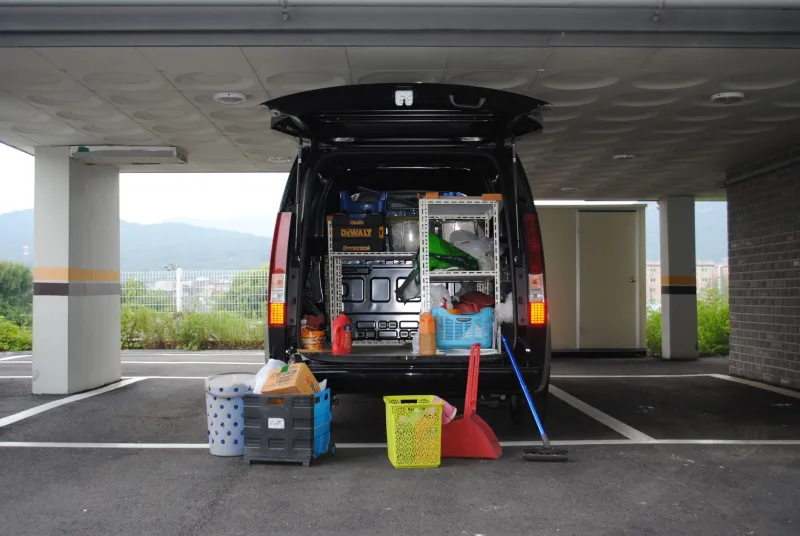
The Early Door and the Late Fob: Making Out-of-Hours Cleaning Pay Its Way

Photo by Photo by SOHAM BANERJEE on Unsplash on Unsplash
Out-of-hours cleaning sounds like a straightforward upsell. The client wants the office buffed before the 7am stand-up, or the clinic wiped down after the last appointment, or the gym freshened between the 9pm rush and the 6am opening. Same floors, same bins, same spray bottles. So why can't you just use the same hourly rate?
Because the job is the same, but the day isn't. The moment a clean moves outside normal trading hours, you're not selling cleaning with a slightly inconvenient start time. You're selling access, reliability and a version of your working day that has to fit around everyone else's. That has a price, and it's rarely the daytime figure.
The job is the same; the day isn't
A client comparing quotes often sees two numbers: £22 an hour for a daytime clean and £28 for an early-morning visit. To them, it can look like you've added a convenience fee. To you, it's the difference between a clean that slots into a normal run and one that starts before the buses are busy, requires a keyholder, and leaves you unable to take a daytime job because you're recovering from a 5am start.
That's the first thing to get straight in your own head. Out-of-hours work is not just an hourly rate with a premium stuck on top. It's a separate service line with its own costs. Once you've priced it properly, you can explain it without sounding like you're charging extra for the pleasure of your company.
Build the rate from the odd bits
Start with the wage you'd actually need to pay a cleaner to turn up at 5.30am or finish at 10pm. The UK doesn't have a statutory unsocial-hours premium across the board, so you're making a commercial judgement rather than applying a legal formula. But the judgement still has to be realistic. If your daytime cleaner earns £12.50 an hour, offering the same for an early-morning shift is likely to produce a lot of empty rota slots. A premium of 10% to 25% is a common starting point, depending on your local labour market and how hard the shift is to cover.
Then add the bits that only appear out of hours. Travel between sites can be slower or faster, but it still happens, and it still costs you. If a keyholder has to open up, wait, lock up and reset an alarm, that's time. If you're the keyholder, it's your time and your risk. If a supervisor has to be on call in case something goes wrong, that's a cost too. Build these into the quote rather than hoping they'll disappear.
A simple way to do it is to price the visit, not just the cleaning hours. Work out the total time from leaving your front door to getting back, then add a sensible margin for the unsocial element. If the visit is two hours of cleaning but three hours of your evening, the client is buying three hours of your evening.
Keyholding is a paid skill, not a favour
Early-morning office cleans often come with keys, fobs, alarm codes and a building manager who is not awake yet. That's not a minor detail. Keyholding is a responsibility. If you lose a fob, set off an alarm or arrive to find the building already occupied, you need a plan and a contact who will answer the phone at 6am.
Price for that. A small keyholding or access fee per visit, or a monthly retainer for holding keys and being the first point of contact, is reasonable. It also signals to the client that access is part of the service, not an afterthought. If they push back, ask them what happens when their own staff member loses a fob. The answer usually involves a locksmith, a security company or an insurance claim. Your fee is cheaper than any of those.
For clinics and gyms, access can be more complicated. There may be alarm zones, fob logging, a cleaner's cupboard that has to be locked, or a reception area that cannot be left unsecured. Write these into the quote as line items. A client who sees 'keyholding and alarm response' on the quote understands what they're paying for. A client who sees a vague higher hourly rate may just assume you're chancing it.
Lone working changes the risk
Out-of-hours cleaning often means cleaning alone. That's normal in the industry, but it isn't risk-free. A lone cleaner in an empty office, a clinic with controlled drugs on site, or a gym with heavy equipment needs a way to raise the alarm if something goes wrong.
Your pricing should reflect the safeguards you put in place. That might be a check-in call at the start and end of the shift, a lone-working risk assessment, a personal alarm, or a rule that certain jobs are never done alone. None of these are free. They are also not optional if you want to run a business that treats staff properly and protects your reputation.
When you quote, you don't need to itemise every safeguard. But you do need to know they're in the number. If a client asks why the rate is higher, 'we staff these visits with lone-working safeguards and a supervisor on call' is a better answer than 'because it's early'.
Minimum visits stop the small jobs eating the week
A one-hour out-of-hours clean can be a false economy. By the time you've travelled, opened up, cleaned, locked up and got home, you may have spent two and a half hours on a job that pays for one. That's why a minimum visit charge matters.
Set a minimum that covers the full trip, not just the cleaning. For some cleaners, that's two hours. For others, it's a fixed call-out fee plus the cleaning time. Either way, the client should know before they book. A gym that wants a 45-minute touch-up at 5am is not the same as a gym that wants a two-hour deep clean. Price them differently, and don't be afraid to say that very short out-of-hours visits don't work for your business.
Explaining the number without apologising
Clients often expect the same hourly figure as daytime work because they see cleaning as cleaning. Your job is to explain the difference without getting defensive.
Try something like: 'Our daytime rate covers the clean and the normal travel between jobs. Out-of-hours visits include a higher staff rate for the unsocial hours, keyholding and alarm responsibility, and a supervisor on call. That's why the hourly figure is higher, but it's the same clean.'
If they want the daytime rate, offer a daytime slot. If they need the early door, they need the early-door price. That's not a penalty. It's a different service.
Put it in writing
Finally, put the out-of-hours terms in the quote or contract. State the visit window, the access arrangements, the cancellation notice, the minimum charge and what happens if the client's keyholder doesn't turn up. If the alarm goes off because someone left a window open, who pays? If the clinic runs late and your cleaner is standing outside, does the clock start? These details are easier to agree before the first 6am start than after the first invoice.
Out-of-hours cleaning can be good work. It can fill gaps in the day, build relationships with commercial clients and pay a sensible premium. But it only works if the quote reflects the real cost of being there when everyone else isn't. Price the early door and the late fob properly, and you won't be giving away your evenings for free.