Four Ways to Get Your Cleaning Kit on the Road Without Blowing the Start-Up Budget
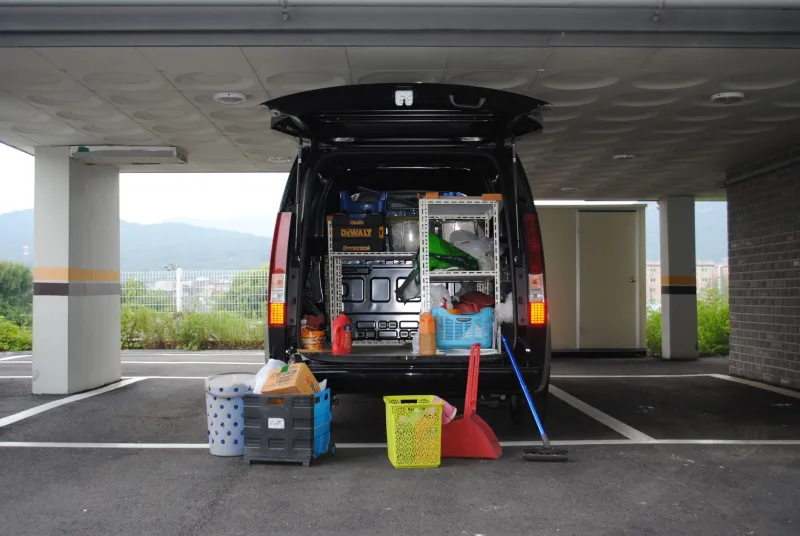
There's a moment in every new cleaning business when the car boot stops being funny.
You've got two mop buckets, a vacuum, a caddy of cloths, a stepladder and a faint smell of lemon floor cleaner. The back seat is full. The passenger footwell is a health hazard. You start browsing vans on a Sunday evening and suddenly a £3,000 second-hand Caddy looks like the answer to everything.
It might be. But a vehicle is one of those purchases that feels operational while quietly behaving like a financial decision. Get it wrong and you've tied up money you needed for public liability insurance, a decent vacuum, and the awkward gap between doing the work and getting paid for it.
So let's look at the four realistic routes for a UK cleaner in 2026 — buying second-hand, leasing, using the car you already own, and borrowing or renting — without pretending there's one right answer.
Start with the work you've actually got
Before comparing deals, write down a normal week. How many jobs? How far apart? Do you carry bulky equipment, or is it mostly cloths and chemicals? Are you doing domestic cleans within three miles, or end-of-tenancy jobs across the county?
A solo cleaner doing five local houses a week can run a small hatchback for months. A two-person team carrying vacuums, steps and consumables to holiday lets needs load space and a roof that doesn't leak. The vehicle should follow the work, not the other way round.
Also be honest about cash. If you've got £6,000 in the business account and £3,000 is your entire buffer, spending £2,500 on a van plus insurance, tax and a first service is not a £2,500 decision. It's a decision to run the next two months with almost no slack.
Route one: buy a cheap second-hand van
The appeal is obvious. No monthly payment. You own an asset. If work dries up, you can sell it — though possibly for less than you hoped.
In 2026, a usable small van — think sub-£8,000 — is often a 2014 to 2018 model with 90,000 to 140,000 miles. At the cheaper end you're looking at older Transit Couriers, Berlingos, Partners and Caddys. Some will be brilliant. Some will have a clutch on borrowed time and a service history written in biro.
Budget beyond the sticker price. A realistic first-year pot for a £3,000 van might include:
- £1,200 to £2,500 for van insurance, depending on age, postcode and claims history
- £300 to £500 for servicing, brakes and tyres
- £200 to £350 for road tax, depending on emissions and age
- £50 to £100 for MOT
- £300 to £600 for signage, ply lining or a roof rack
That's before fuel and any clean air zone charges. If you drive into London, Birmingham, Bristol or another charging zone regularly, check the rules for that specific vehicle before you buy. A cheap diesel can become an expensive diesel very quickly.
Buying makes most sense if you have a genuine cash cushion, you're comfortable with maintenance surprises, and you plan to keep the van for several years.
Route two: lease a newer van
Leasing turns a big unknown into a monthly known. You get a newer vehicle, likely under warranty, with predictable payments. For a cleaner who needs reliability and a professional look, that's worth something.
A small van lease in 2026 might be £220 to £380 a month plus an initial payment, depending on mileage, term and model. Over three years, that's £8,000 to £14,000 before insurance, servicing and fuel. It is not cheap. But it's spread out, and it may preserve cash for marketing and equipment.
Read the small print like it owes you money. Check the annual mileage allowance, what counts as fair wear and tear, the cost of going over mileage, and whether maintenance is included. A lease that looks affordable at £250 a month can become painful if you're doing 25,000 miles a year and the allowance is 10,000.
Leasing suits a cleaner with steady, predictable income and a clear idea of annual mileage. It suits less well if you're still testing whether the business will work.
Route three: use the car you already own
This is the route most new cleaners actually take, and there's no shame in it. A hatchback with a boot liner, a folding trolley and a vacuum that lives in the hallway between jobs can get you through year one.
But tell your insurer. Personal car insurance usually doesn't cover business use, and 'I was just carrying my own cleaning products' is not a convincing claim conversation. You'll likely need business use added to your policy, which may increase the premium. If you're carrying equipment for clients or travelling between jobs, be precise with the insurer about what you do.
Then count the hidden wear. Repeatedly loading a wet vacuum and buckets in and out of a hatchback damages trim, suspension and your patience. If you're doing this for 18 months, you may spend more on repairs and valeting than a modest van would have cost.
Route four: borrow, rent or share
Borrowing a van from a friend or family member is cheap until it isn't. Insurance is the sticking point: you need to be covered to drive it for business, and the owner needs to be honest with their insurer. A informal arrangement can work for occasional big jobs, but it's not a foundation for a weekly round.
Renting by the day can be useful for end-of-tenancy cleans or one-off deep cleans. Expect £50 to £90 a day for a small van, plus fuel and insurance excess. If you only need extra space twice a month, renting can be cheaper than owning. If you need it every week, the maths flips quickly.
Sharing a van with another cleaner is possible but needs rules: who pays for insurance, who books it, who cleans it, and what happens when one of you needs it on the same morning. Put it in writing, even if it's a friend.
The costs that don't make the brochure
Whatever route you choose, add these to your spreadsheet:
- Insurance: cleaning vans can be pricey for new businesses. Get quotes before you buy, not after.
- Fuel: a small van may do 40 to 50 mpg on mixed runs; a loaded older van will do worse.
- Servicing and tyres: vans eat tyres faster than cars, especially with stop-start urban work.
- Clean air zones: check every zone you'll regularly enter.
- Security: a lockable bulkhead, alarm or steering lock is cheaper than replacing a vacuum and a client's key safe.
- Signage: magnetic signs are cheap and removable; full wraps look smart but cost £500 to £1,500.
A simple decision framework
Ask three questions:
- Have I got at least three months of business costs in reserve after buying? If no, don't buy outright.
- Do I know my annual mileage within about 20%? If yes, leasing is easier to compare. If no, avoid long leases.
- Am I likely to hire within 12 months? If yes, buy a van with a second seat and load space. If no, a car may do.
For many solo cleaners starting in 2026, the sensible order is: use the car for the first few months, save the cash, then buy a £4,000 to £6,000 van once the round is steady. Lease if reliability and image matter more than long-term cost. Borrow or rent only for occasional big jobs.
The van is not the business. The clients are. Spend accordingly.