The Two-Hour Handshake: Testing a New Cleaning Client Without Working for Nothing
Photo: Mr Ignavy , CC BY-SA 2.0, via Wikimedia Commons
Most cleaning businesses get the same suggestion sooner or later: give the first clean away free, and the client will reward you with loyalty. It sounds generous. In practice, a free first clean is a job interview where you do the work, supply the products and the client keeps the result. A paid trial clean does the same filtering with far less resentment.
This is not about being hard-nosed. It is about treating your time as a real cost. A short paid trial tells you more about a client than a free visit ever will, because money changes the conversation. People who are only after a bargain tend to disappear when you mention a price. People who value a proper service tend to respect a clear scope and a fair rate.
Why the free first visit usually backfires
A free clean costs you travel, materials, insurance cover and two or three hours you could have spent on a paying job. It also sets a dangerous precedent. If the first visit is free, the second visit can feel expensive by comparison. Some clients will expect extra rooms, extra tasks or a deeper clean because they have already seen what you can do for nothing.
A free quotation is a different thing. A 15-minute visit to look around, measure the job and meet the client is a sensible sales cost. A free clean is not a quotation. It is unpaid work with a hopeful ending.
What a paid trial clean actually is
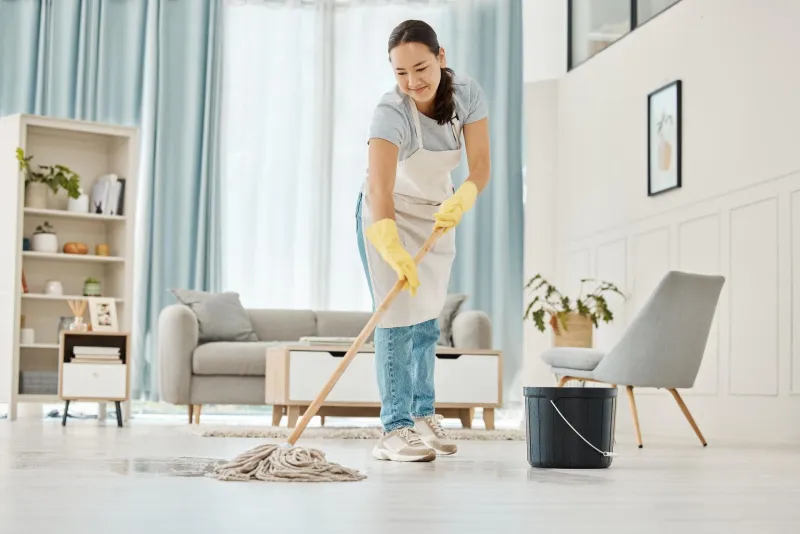
A paid trial is a shortened, clearly scoped first clean at your normal rate. Think two to three hours for a domestic client, or one agreed area for a small commercial client. It is not an end-of-tenancy clean, a deep clean or a full house reset. It is a representative slice of the regular work you would do.
Call it the first clean rather than an audition. The framing matters. You are not asking the client to judge you. You are both checking whether the practical details line up: access, parking, pets, expectations, water pressure, clutter and the general condition of the property.
Put the scope in writing before you book. A simple message or email is enough: the rooms covered, the tasks included, the time limit and the price. That one message prevents most of the awkwardness later.
Price it like work, not like a sample
Charge your standard hourly rate, with a sensible minimum. For most domestic cleaners, a two-hour minimum is reasonable. If you have to travel far, make it three hours or add your normal travel charge. Do not invent a special trial discount. A discount invites the client to expect discounts on the regular service too.
Payment should be clear from the start. Bank transfer on the day is normal for many sole traders. If you usually take card payments, say so. If you take a deposit for larger commercial trials, explain what it covers. The point is not to be rigid. The point is to avoid finishing the trial and then having an uncomfortable conversation about money.
For small commercial clients, price the trial as a one-off visit for a named area: the kitchen, the customer toilets, the reception and meeting rooms, or the office floor. Make it clear that the trial does not include periodic deep work such as carpet extraction or window cleaning unless you have quoted for it separately.
Scope the job before you pick up a cloth
A paid trial only works if it has edges. Before the visit, agree what you will do and what you will leave. A domestic trial might cover the kitchen surfaces, sink, hob, bathroom, vacuuming of main traffic areas, dusting of accessible surfaces and a quick mop. It probably does not cover inside the oven, inside the fridge, carpets, windows, heavy limescale, garages or mountains of laundry.
If the client wants those extras, quote them as separate work. That is not unhelpful. It is how you avoid spending three hours on a two-hour trial and resenting the client before the regular slot even starts.
What you are actually assessing while you are there
A trial clean is a two-way inspection. You are checking the client as much as they are checking you.
- Access and parking. Can you get in easily? Is there a permit, a key safe, a concierge or a narrow staircase? Will parking eat into your hourly rate?
- Condition and clutter. Is the property realistically cleanable in the time the client wants to pay for? Are there signs of hoarding, damp, pest issues or heavy limescale that need a different conversation?
- Pets and people. Will a dog be underfoot? Will someone be home and follow you around? Is the house chaotic in a way that makes two hours unrealistic?
- Expectations. Does the client understand the difference between a maintenance clean and a spring clean? Do they keep adding small tasks?
- Communication. Are they clear, polite and reasonable about timing? Do they respond to messages before the visit?
- Health and safety. Are there trip hazards, biohazards, fragile items or cleaning products you would not use? Do you have the right insurance cover for the work?
You do not need a scorecard. You just need to notice whether you would be happy to return every week or every fortnight. If the answer is no, the trial has done its job.
Turning the trial into a regular slot
The conversion should happen before you leave, or in a follow-up message the next day. Do not ask a vague question such as whether they liked it. Offer a specific next step.
Something like: I can hold Thursday at 10am for a weekly clean at the same rate. Would you like me to put you in the diary? That is clear, polite and easy to answer. If they want fortnightly instead, you can adjust. If they hesitate, give them space. A trial that ends with a polite invoice is still a successful trial if it saves you from a difficult regular client.
If you have called it the first clean from the beginning, there is no awkwardness to manage. The client is not rejecting a free sample. They are simply deciding whether to book the next appointment.
When a free visit still makes sense
There are exceptions. A large commercial contract, a property management portfolio or a tender may justify a free site survey. That survey should be a short walk-through, not a clean. For domestic clients, a phone call, photos or a video call can often replace a free visit altogether.
A paid trial is not about squeezing every penny out of an enquiry. It is about matching effort to value. You give the client a real clean, a clear price and a fair chance to see how you work. In return, you get paid for your time and a much better view of whether the relationship is worth continuing.